





Blog
Types of Bondage Gear: The Complete Guide
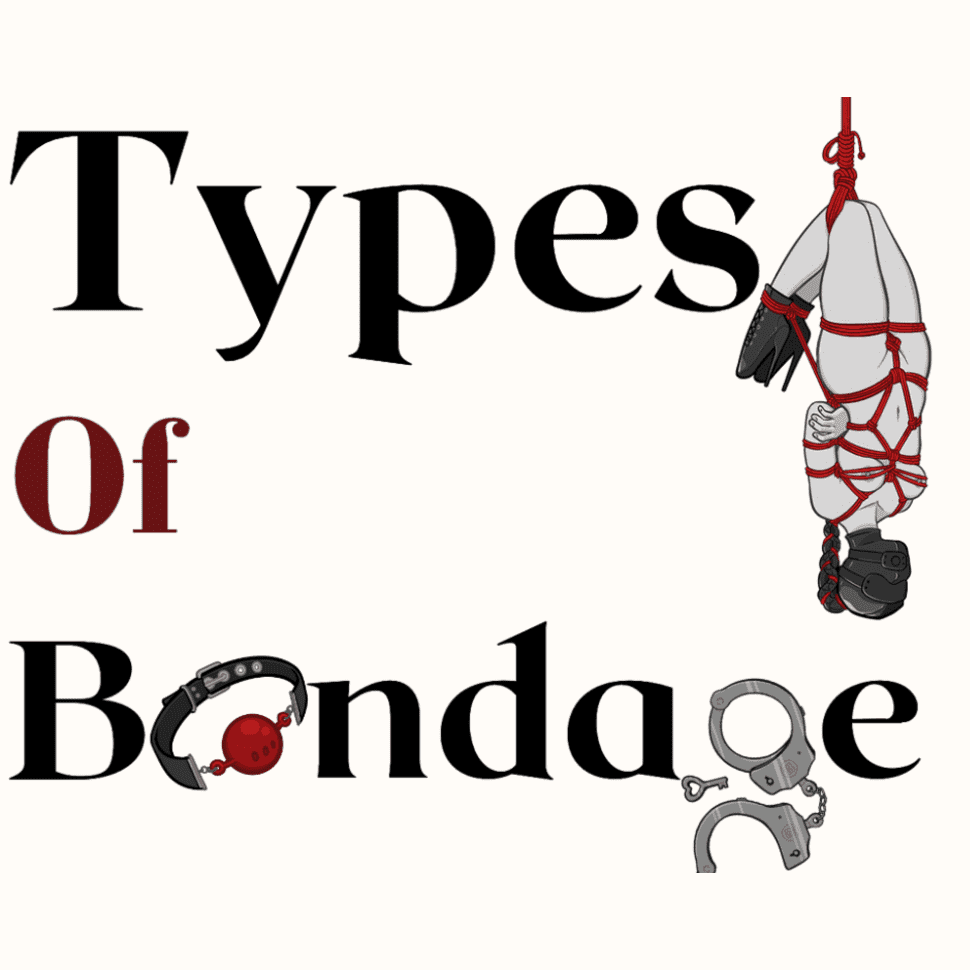
Bondage gear enhances intimacy, communication, and trust in relationships. Whether you are a beginner or experienced, this guide will help you explore the different types of bondage gear available. Let’s dive in!
Bondage is a thrilling form of BDSM play that involves restraint and control, enhancing trust and intimacy between partners. Whether you’re a beginner or experienced, understanding the types of bondage gear available can help you explore and enjoy this aspect of kink safely and responsibly. This guide covers various types of bondage gear, each designed to elevate your experience and provide different levels of sensation and control.
1. Handcuffs and Restraints
Handcuffs and restraints are among the most common and essential bondage tools. These allow for the restriction of movement, providing a sense of power imbalance. They come in different materials, such as metal, leather, or soft fabric, each offering a unique feel and level of comfort.
Types to Consider:
- Metal Cuffs: These provide a firm, secure grip and are often used for their restrictive, dominant feel.
- Leather Cuffs: These are softer, comfortable, and suitable for long play sessions, especially for beginners.
- Fabric Cuffs: Often adjustable and gentle on the skin, these are a good option for those new to bondage.
Tip: Always have a key or quick-release option nearby for safety in case of emergencies.

2. Ropes and Shibari Kits
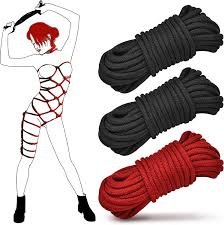
Rope bondage, or Shibari, is a popular and visually striking form of restraint. It involves intricate knotting techniques that bind a person’s body in artistic and often sensual ways. Ropes allow for flexibility in positioning and are ideal for more advanced players.
Types of Ropes to Consider:
- Cotton Ropes: Soft, flexible, and easy to handle, cotton ropes are great for beginners.
- Hemp Ropes: These are durable and offer a more rugged aesthetic, preferred by experienced rope enthusiasts.
Tip: Practice basic knots and be mindful of circulation and comfort during rope bondage to avoid injury.
3. Blindfolds
Blindfolds heighten the senses by blocking sight, which enhances anticipation and makes other sensations more intense. This simple tool is perfect for those exploring sensory deprivation or power exchange.
Types to Consider:
- Silk or Satin Blindfolds: Soft, luxurious, and gentle on the skin, these are great for beginners and long wear.
- Leather Blindfolds: These provide a more intense, dominant feel and block out light completely.
Tip: Communicate with your partner about comfort and duration, especially if you’re new to blindfolding.

4. Gags
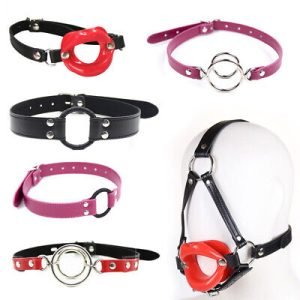
Gags restrict verbal communication, adding an extra layer of submission and control to the scene. There are several types of gags, each serving a different purpose and providing unique sensations.
Types to Consider:
- Ball Gag: A classic in BDSM, it silences the wearer with a ball placed in the mouth.
- Bit Gag: This type uses a mouthpiece similar to a horse’s bit, often more comfortable than a ball gag.
- Open Mouth Gag: This allows for some movement of the mouth but restricts speech.
Tip: Always prioritize your partner’s safety and ensure they can breathe comfortably while wearing a gag.
5. Collars and Leashes
Collars and leashes are used in power dynamic play, often symbolizing submission and control. They can be worn as a form of aesthetic expression or serve as a functional tool in a BDSM scene.
Types to Consider:
- Leather Collars: Durable and stylish, they’re often used for long-term wear and can include D-rings for attaching leashes or cuffs.
- Faux Leather Collars: A more affordable alternative to leather, offering a similar aesthetic.
- Collars with Leashes: Perfect for walking, guiding, or controlling your submissive during play.
Tip: Always ensure the collar fits comfortably, and avoid tightness around the neck.

6. Spreaders and Bars
Spreader bars are devices that keep the limbs apart, increasing the feeling of vulnerability and restriction. These tools are often used for advanced BDSM play, adding an element of exposure and control.
Types to Consider:
- Adjustable Spreader Bars: These allow you to control the distance between limbs for personalized play.
- Fixed Spreader Bars: Provide a more rigid and controlled experience, often used for specific positions.
Tip: Combine spreader bars with cuffs or restraints for added intensity.

7. Bondage Furniture
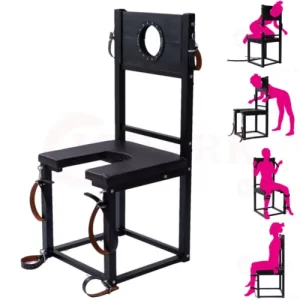
Bondage furniture provides support and comfort for various BDSM positions. Whether it’s a bondage bench, suspension frame, or spanking bench, these pieces enhance your play and help achieve different positions safely.
Types to Consider:
- Bondage Benches: Provide stable support for lying down and allow for various restraint positions.
- Spanking Benches: Designed for spanking, they position the submissive to expose the backside.
- Suspension Frames: For those interested in suspension bondage, these frames provide secure and safe methods to suspend the body.
Tip: Invest in comfortable and adjustable furniture if you plan on incorporating it into long sessions.
Prioritizing Consent, Negotiation, and Safety
Bondage offers a versatile and exciting way to explore intimacy, catering to all experience levels. Whether you’re new to BDSM or a seasoned enthusiast, prioritizing consent and safety is essential. Open communication and negotiation with your partner are crucial, ensuring a shared understanding of boundaries and expectations. Following RISK (Risk-Aware Consensual Kink) and SSC (Safe, Sane, Consensual) guidelines can create a secure and enjoyable experience that enhances trust and connection.
Essential Bondage Safety
Consent
In BDSM, consent is when a participant permits another person to perform BDSM or sexual activities with or on them. It can only be given if the person is in a rational state of mind (alcohol and drugs are best left out of BDSM play), and it should be unambiguous. A non-committal or lack of response should be considered a no. To have true consent, you must receive an unequivocal “Yes!” response to proposed activities.
Communication, negotiation, and risks
Always communicate openly with your partner to discuss the proposed scenario, address potential risks, and establish clear safe words or signals before engaging in any BDSM scene.
Take your time
If you’re new to bondage, keep things simple, start slowly, and restrain one part of the body at a time. This will give you time to get to grips with what you’re doing before incorporating other things. Plus, taking it slowly heightens the anticipation. Enjoy each moment of the scene, and remember that you are taking your partner on a sensual and sexy journey.
Check-In
Now that you’ve established boundaries, bargained, and discovered safe phrases and signals, it’s time to play! It’s natural to lose yourself in play, but you also need to keep an eye on proceedings — is your partner enjoying the scenario as much as you are? Check in with each other. There are ways to do this without breaking the excitement of the scene.
For example, during a spanking, you could ask your partner, “Do you like that? You tiny slut, do you want more?” or anything comparable that solicits their opinions without detracting from the sensual atmosphere. With restraints, you want to ensure the person restrained isn’t too uncomfortable — numbness and tingling can indicate restraints are overly tight.
Be Prepared
Always be prepared. Even well-planned scenarios can run into problems on occasion. Make sure you can free your lover from their restraints quickly — keep a pair of safety shears or medical scissors handy. It’s also wise to have a first aid kit available, just in case.
Negotiation
We’ve already touched on negotiation, which involves an in-depth conversation before any play takes place. This is a time for honesty and all players should be open about their likes and dislikes. You can even use a premade checklist for this (available in many BDSM books).
Boundaries, soft limits, and hard limits need to be discussed. What play is deemed acceptable and what should be avoided? A hard limit is something that the person is not okay with. A soft limit is something they are concerned about but might be open to exploring under the right conditions.
It’s also important to outline the scenario in terms of expectations and how each person would like things to proceed.
What are your safe words?
Safe words are needed to ensure the scene is safe, sane, and consensual. Standard BDSM-safe terminology include “green,” “yellow,” and “red.” Green indicates that everything is great, Yellow indicates play should be slowed down or decreased in intensity, and red is used to signify that play should immediately stop.
It’s a good idea to identify safe signals too. Occasionally safe words are lost in translation, especially if gags and hoods are being used. A tap of the hand on play equipment or dropping a held object could also be used to denote that play should cease.
Who will be playing what role?
Who will be in control of the scenario? One partner typically takes the role of the Top (the person acting upon the other) and the other partner takes the role of the Bottom (the recipient of the BDSM actions. There is much confusion regarding the terms Top/Bottom and Dominant/submissive. Top/Bottom refers to who is acting upon whom. Dominant/submissive refers to a form of power exchange in which one person willingly gives up some measure of control to the other, and this often forms the context for a BDSM relationship. It is often (but not always the case) that the Top will be the Dominant, and the Bottom the submissive.
We offer a D/s dynamics class if you’re interested in learning more about dominant/submissive relationships. It provides basic knowledge, safety guidelines, and guidance on how to establish that dynamic with your partner or partners in a healthy way.
What gear will be used?
Determine exactly what gear will be used before play begins and work out how you will incorporate it into a scene. It’s always a good idea to take time to work out how to use the gear in your kit properly too. This way you avoid fumbling during the scene and ensure it goes smoothly.
Discuss Triggers, Concerns, etc.
Before you begin a scene, you need to talk about any concerns or potential triggers. For instance, a submissive might find hoods too challenging due to past trauma or a bad experience. Will hoods be a hard limit or is it a boundary that can be explored during play (with due care and attention)? The Top needs to be aware of any issues so they can prepare and look out for any issues.
Play partners should also disclose any relevant medical conditions. Are there any disabilities or injuries likely to affect play? Are you taking medication or do you have a condition that needs to be treated immediately if symptoms arise (such as an inhaler for asthma or an epi-pen for an allergy)?
What will happen if something goes wrong in the scene?
Even with the greatest of intentions, play may occasionally go wrong. What happens if a playmate suddenly becomes agitated or feels overburdened? If you or your companion get sick while playing, how will you manage the situation? Endorphins are frequently released during BDSM play, and while they feel good, they can also make a person feel dizzy or sick. It’s critical to keep an eye on your spouse and be ready. If your partner gets sick, it is your duty at the top to halt the scenario. They might not be in the right frame of mind to make use of their protected world. Ending a session with the sensation that you could have done more is always preferable than going too far and endangering your partner’s physical or mental well-being. or psychologically.
What will aftercare look like?
A crucial component of any situation is aftercare. After your scenario is over, take a moment to tend to each other. The submissive may require a cuddle, a warm blanket, a drink, some food, or a conversation, therefore the dominant should make sure they are taken care of. The dominant also has needs. It takes time for both parties to relax and go back to their regular lives. Depending on who you’re playing with, what you did, what transpired during the scene, and other variables, the actions that make up your aftercare may change.
What Do Intermediate, Advanced, and Beginner Mean?
We propose equipment in this blog according to your skill level. These levels were designated as Beginner, Intermediate, and Advanced. The suggested experience level is determined by a number of factors, which are discussed below.
To help you stay safe while playing, we suggest gear for players at different skill levels. Bondage play, like any BDSM play, is never completely risk-free. The best way to approach bondage is to adhere to the safety and consent requirements we mentioned above and educate yourself on the kind of equipment you want to use because there is always some degree of danger.
It is crucial to remember that safety, permission, and clear communication are learned abilities that require self-control and several play sessions to hone. essential skills!
Beginners
Players who are unfamiliar with bondage and/or BDSM are considered beginners. In BDSM, beginners have little to no experience with safety and consent. We would classify you as a novice if you have little experience utilizing safewords, conducting in-depth discussions, organizing a scene in advance, and speaking plainly and directly with a partner. Beginners are learning to read their own body and, if relevant, those of the others they play with. Learning to pay attention to your body and recognize when to stop, slow down, or continue is crucial!
We advise novices to avoid the temptation to experiment with more sophisticated equipment and instead begin with entry-level bondage equipment! To reduce risk in your future activities, start by building a solid foundation.
Intermediate
Intermediate players are at ease adhering to and implementing safety and consent requirements since they have previously studied BDSM. You may be on the verge of novice or intermediate if you are new to bondage but have some experience with BDSM play. However, practicing safety and consent beforehand will make it easier for you to progress!
Based on their own and/or their partner’s bodily cues, intermediate players know whether to slow down, halt, or continue.
Advanced
Advanced players are well-versed in both bondage play and BDSM. They regularly follow safety and consent regulations and are very at ease with them. They are adept at safely experimenting with new equipment and play styles. They are confident in their capacity to pick up new skills and possess the fundamental knowledge required to play with a new kind of equipment (foundational rope knots, anal stretching, etc.).
Whether you’re a novice or an expert player, bondage gear brings up a world of intimacy and discovery. Every kind of equipment, from ropes to handcuffs, gives different feelings and experiences, so pick the one that best suits your tastes and style. For a satisfying and pleasurable BDSM encounter, don’t forget to put communication, permission, and safety first.